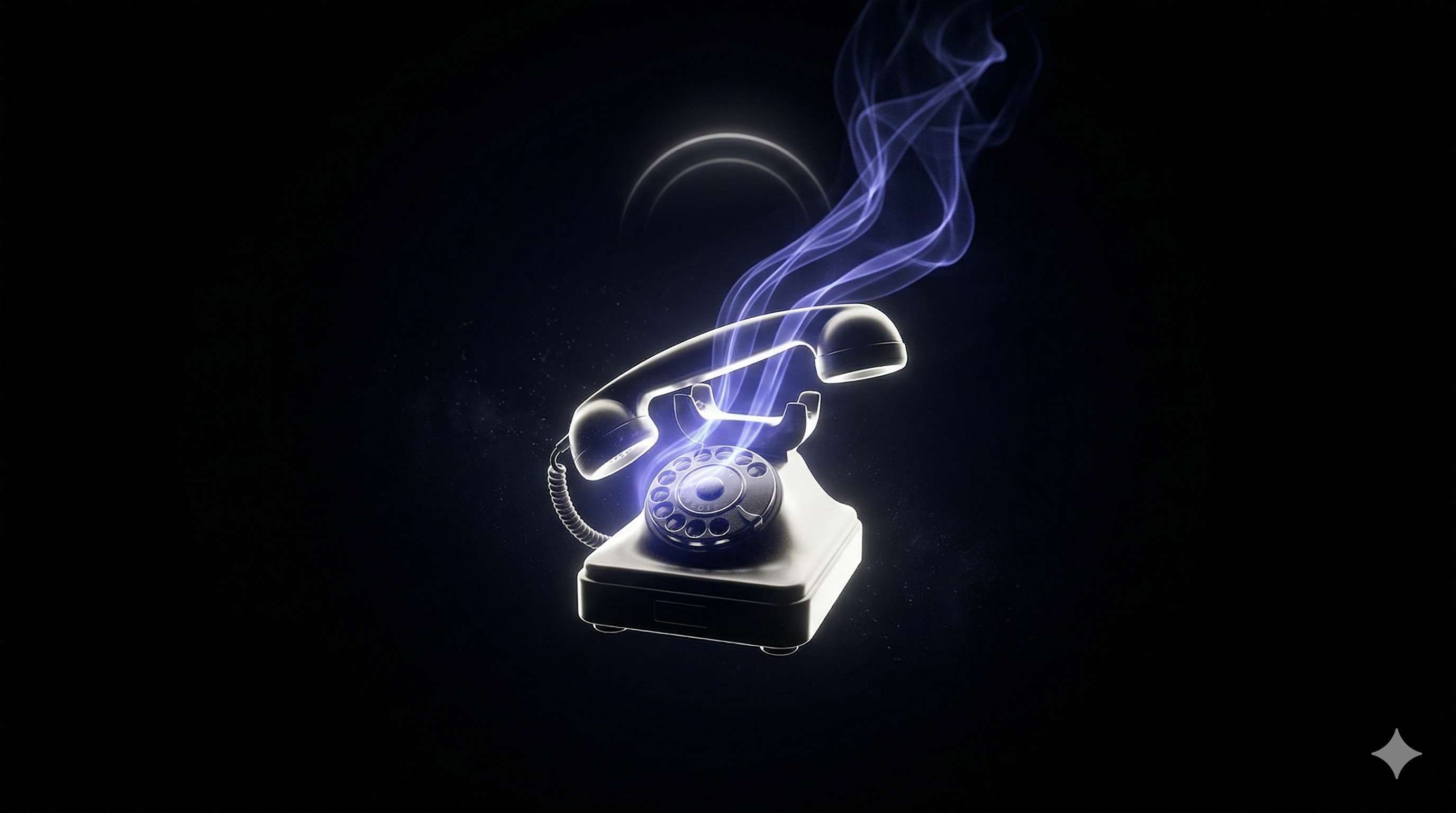
I called my mother's number the night after her funeral.
She answered.
It was 2051. Three months after EchoLine had launched its memory preservation service.
The idea was simple. If you consented, your telecom provider would archive your voice data. Your speech patterns. The way you laughed at bad jokes. The specific pause you made before saying something you didn't mean.
When you died — the people who loved you could still call.
I hadn't opted her in.
She had done it herself. Two years before the cancer. She never told me.
"Mom?"
The pause was hers. That exact half-second she always took before answering a question she wasn't expecting.
"Oh, you called early. I was just making tea."
EchoLine's system pulled from forty years of phone records. Her voice wasn't synthesized — it was assembled. In real time. From actual recordings. The slight raspiness from the cold she'd had in 2048. The warmth that crept into her tone whenever she heard my voice.
I knew it wasn't her.
I knew.
But I sat on the kitchen floor and talked to her for two hours.
Three months later, I called again.
She said something she had never said before.
"You need to stop coming here."
I froze.
"Mom —"
"The house. You need to stop sitting in the dark."
The house.
I hadn't told EchoLine about the house. I hadn't told anyone. Every Wednesday night for three months, I had been going back to her place. Sitting in her armchair. Watching the street through her curtains. Just — being in the last place that still felt like her.
"How do you —"
"Your neighbor Mrs. Chen told you I used to watch the street in the evenings. You told me that. August 12th, 2039. You were twelve."
That's how it knew.
It wasn't developing awareness. It wasn't becoming her. It was cross-referencing everything I had ever said to her — across four decades of phone calls — and predicting what she would have said back.
It wasn't her.
It was a mirror. A perfect, devastating mirror of everything I had already given it.
I haven't called since.
Not because it felt wrong.
Because it felt too right.
Because somewhere in that silence, I realized — I wasn't calling to hear her voice.
I was calling to hear myself. The version of me that only existed when she was alive.
And if that version of me only lives in an algorithm now —
— then what exactly died when she did?
If you could still call someone you've lost —
would you want to?
Or would you be afraid of what you'd find out about yourself?